The Diwan of al-Mutanabbi: Arabic Poetry's Highest Peak
Seebawayh Team
8/1/2026
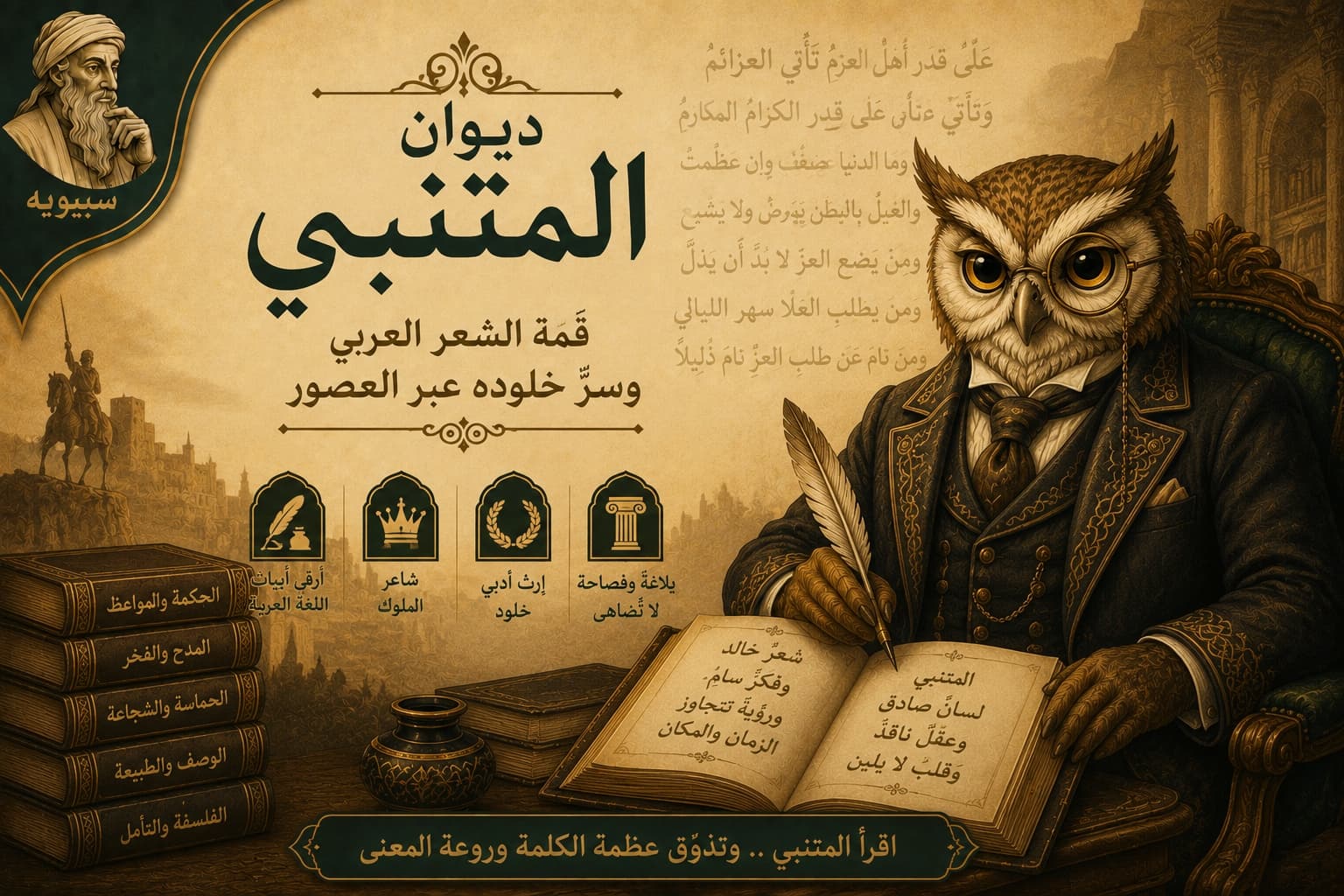
Al-Mutanabbi: "Filling the World, Occupying People"
Abu al-Tayyib Ahmad ibn al-Husayn al-Mutanabbi (303–354 AH), the Kufan poet, is considered the greatest Arabic poet ever by most classical and modern critics. Abu al-'Ala' al-Ma'arri called him "the one who fills the world and occupies people."
He served three courts; Sayf al-Dawla al-Hamdani (Aleppo), Kafur al-Ikhshidi (Egypt), and 'Adud al-Dawla al-Buwayhi (Shiraz); and his diwan became a poetic chronicle of the 4th Islamic century.
Structure
~326 poems and fragments across:
- Panegyric (madh): the Hamdaniyat and Kafuriyyat
- Self-praise (fakhr)
- Wisdom (hikma): verses that became proverbs
- Elegy (ritha')
- Love/reproach
Famous Verses
On ambition:
If you venture toward a coveted glory / do not settle for less than the stars
On self-praise:
The horses, the night, and the desert know me; / so do the sword, the spear, paper, and pen
On a smiling lion:
When you see the lion's fangs bared / do not think the lion is smiling
Why Read al-Mutanabbi Today
- Enriches your Arabic vocabulary with the finest classical diction.
- Provides ready-made wisdom quotations.
- Offers dense material for grammatical parsing: try Seebawayh's tool on any of his lines.
The Best Commentaries
- al-Wahidi's explanation: the most comprehensive.
- al-Barquqi's modern edition: most accessible.
- al-'Ukbari's Tibyan: grammar-focused.
- Ibn Jinni's Fasr: by his own teacher.
Read the full Arabic version: «ديوان المتنبي»
Keywords: al-Mutanabbi, Arabic poetry, greatest Arab poet, Abbasid poetry, wisdom verses.